
We already knew how: what I discovered in a 1986 workbook
A small paperback from 1986 explained how to turn city backyards into ecologically functional places.
We already knew how: what I discovered in a 1986 workbook
In 1986, a small paperback explained how to turn city backyards into places where birds nest, vegetables grow and pollinators feed. Forty years later, it would still read as new. Why do we know so much and yet do so little, and what does that say about how we value care?
A book on a table at the cave entrance
This summer I went hiking in the Swabian Alb in southern Germany. Near the entrance of the Nebelhöhle, a cave hidden in the forest, someone had set up a table with old books. They were free to take, a quiet gift from strangers to whoever passed by. I picked one up almost without thinking: the ‘Environmental-working book’ (Umwelt-Werkbuch) by Peter Wucherpfennig, a Rowohlt paperback from 1986, written for readers aged twelve and up. Its subtitle promises to follow nature’s tracks with tricks and experiments. It is a hands-on book. It does not lecture about the environment, but it shows you what to build, with what, and when. The further I read, the less it felt like a charming relic. It felt like an accusation, a gentle one, addressed to all of us.
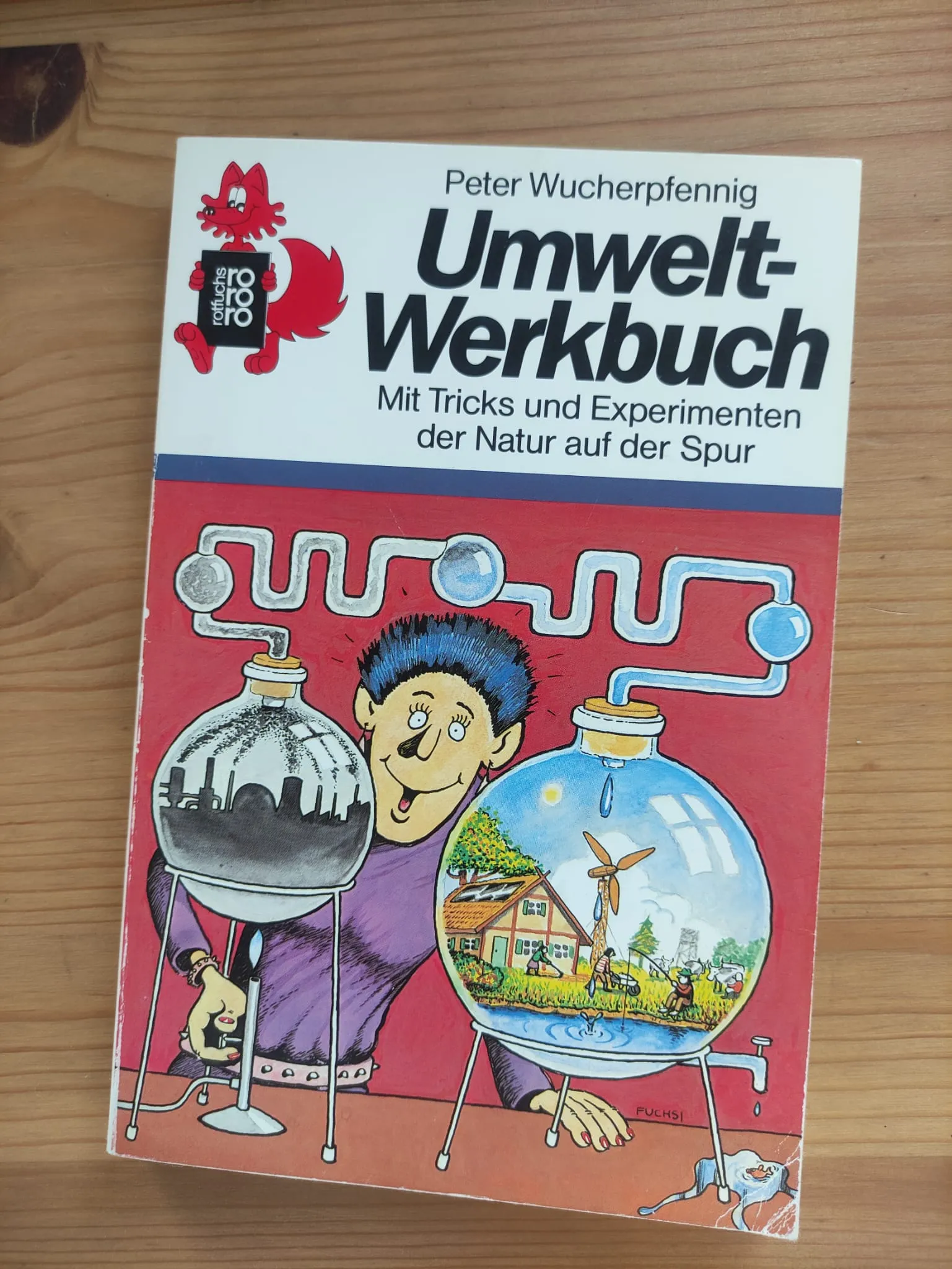
Figure 1. Coverpage of the Umweltwerkbuch from 1986.
What the backyard chapter already knew
One chapter turns to the urban backyard: the paved, forgotten or purely decorative strip of land behind so many city homes. Wucherpfennig treats it as a place of possibility. He shows, step by step, how to build a nest box for birds, how to build planting boxes for vegetables and flowers, and how to install them. He explains when in the year to start, so that plants and animals find what they need at the right moment. Wucherpfennig describes these strategies without doubt about whether this works. The knowledge is simply laid out: this is how you do it, and here is why it matters. Then he asks his readers to start themselves. A call to action from the year 1986. In today’s vocabulary, that chapter is a manual for small-scale ecosystem services. Food provisioning from vegetable boxes. Habitat and nesting support from the bird box. Pollination support from flowering plants. And the cultural services that come from watching a blue tit fly in and out of something you built yourself.
The knowledge was never the missing piece. In 1986 it fit into a paperback for twelve-year-olds.
Forty years later, still barely implemented
Here is the uncomfortable part. We could republish that chapter tomorrow, almost unchanged, and for many readers it would be new information. The twelve-year-olds who read it in 1986 are in their fifties now. They own homes, sit on housing association boards, run municipal departments. Yet walk through the backyards of most European city neighbourhoods and you will rarely see what the book describes. Tiles, gravel, a lawn, a shed. Sometimes a planter. Rarely a working patch of habitat or food. When I ask myself why, I find at least three answers. Some people simply don’t know that these strategies exist. Others know, but don’t know how to begin. And many know and could begin, but lack the time, the energy or the desire to do it. The first two answers are about information, and those are the gaps EcoBUILD works on. The third one is harder. It is not about knowledge at all. It is about what we are willing to give our time to, and what we are rewarded for giving it to.
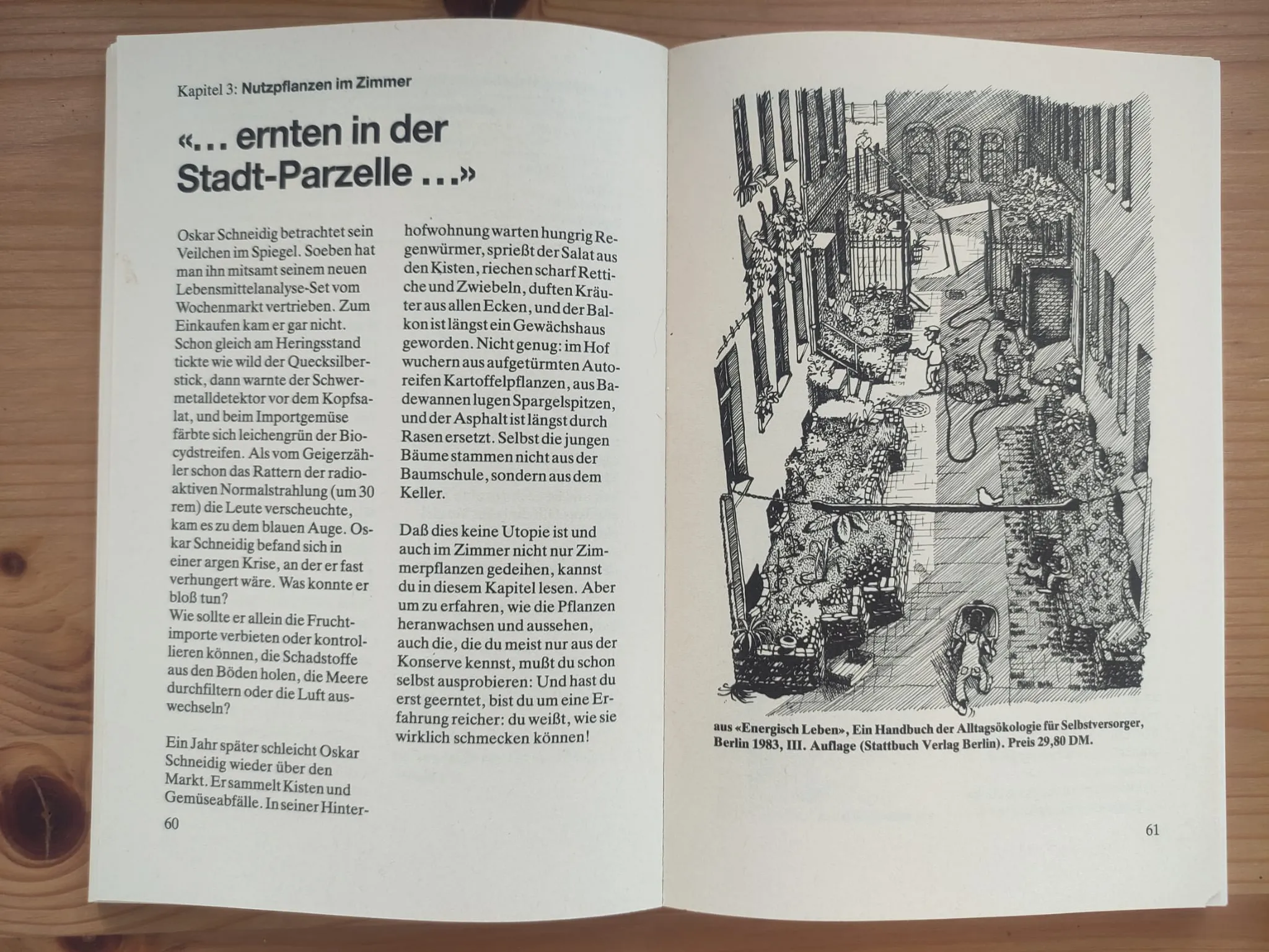
Figure 2. Harvesting in the urban garden plot: a step-by-step guide from the Umweltwerkbuch, 1986.
The zero-maintenance hero
A nest box needs cleaning once a year. A vegetable box needs watering, weeding, harvesting, replanting. A flowering strip needs to be cut at the right moment, not too early, not too tidily. None of this is difficult. All of it is care work: repetitive, unglamorous, never finished. And care work is exactly what our societies have learned to overlook. It is often unpaid, rarely celebrated and easily taken for granted, whether it is care for children, for the elderly, or for the living systems around us. In 1969 the artist Mierle Laderman Ukeles wrote her Manifesto for Maintenance Art, asking a blunt question: after the grand creative act, who does the daily work of keeping things going? More than half a century later, the question still stands. In my own field I see this bias built right into what we praise. Architects and developers are celebrated when they deliver a building that needs no maintenance. Low upkeep is marketed as a virtue. A building that asks for ongoing attention is seen as a cost, a risk, a design flaw. But a living system cannot be zero-maintenance. The moment a building includes soil, plants and animals, it includes relationships, and relationships need tending.
We celebrate designs that free us from care. Then we wonder why so little around us is alive
In an earlier post I described what happens after handover: green walls and pollinator gardens are designed with real ambition, then no one is responsible for tending or monitoring them. The backyard is the same story at a smaller scale. The problem is not the idea. It is that ongoing care has no place in our budgets, our schedules or our sense of achievement.
Cared for, but not caring
We know a great deal about what our cities are doing to us. We know about air and noise pollution, about heat islands, about neighbourhoods with barely a tree. We know that access to green space is linked to better mental and physical health. And still, when I look honestly at how many of us relate to urban nature, I see a certain kind of consumer. We enjoy green areas, flowers, fresh air, and a bit of water. But preferably without insects that sting. We love trees, but not the leaves we have to rake in autumn. We want nature as a service, delivered clean and ready to use. Perhaps that is not surprising. For most of history, ecosystems have provided for us without sending an invoice. Pollination, clean water, fertile soil, cooling shade: these came for free, so they were treated as if they were worth nothing. The ecosystem services concept was partly invented to make this invisible provision visible. But naming a service is not the same as feeling responsible for it.
Therefore, I keep circling a few questions, and I don’t think they have simple answers:
• Do we still perceive our surroundings as alive? Or has the city taught us to see soil, trees and birds as scenery, closer to furniture than to fellow beings?
• Is our economic system simply not built to make time for caring and providing, only for producing and consuming?
• Is it really a lack of money and time? Or are we placing our priorities in other buckets and calling it a lack?
• And underneath all of it: what is life about, if not tending the things that keep us alive?
I don’t want to turn these into a moral lecture. Many people are genuinely exhausted, working long hours, caring for children or parents, with no energy left for a planting box. That exhaustion is itself a symptom of the same pattern: care work piling up, unseen and unshared. Blaming individuals misses the structure.
Designing for care, not away from it
What does this mean for EcoBUILD? Our platform links building design strategies to the ecosystem services they can generate and connects that to evidence. That helps with the first two gaps: knowing what exists and knowing where to start. The Umwelt-Werkbuch reminds me that this is necessary but not enough. Knowledge alone did not change our backyards in forty years. What I take from it is a design question. Instead of treating maintenance as a flaw to be engineered out, we can treat care as a design parameter. How much tending does a strategy need, from whom, how often, and with what skills? Who is responsible after handover? And what does that care give back, in cooling, in food, in biodiversity, in wellbeing? Making that return visible, with numbers where we have them, may be one way to shift care from an invisible cost to a recognised contribution.
A living building is not one that needs no one. It is one that is worth someone’s care.
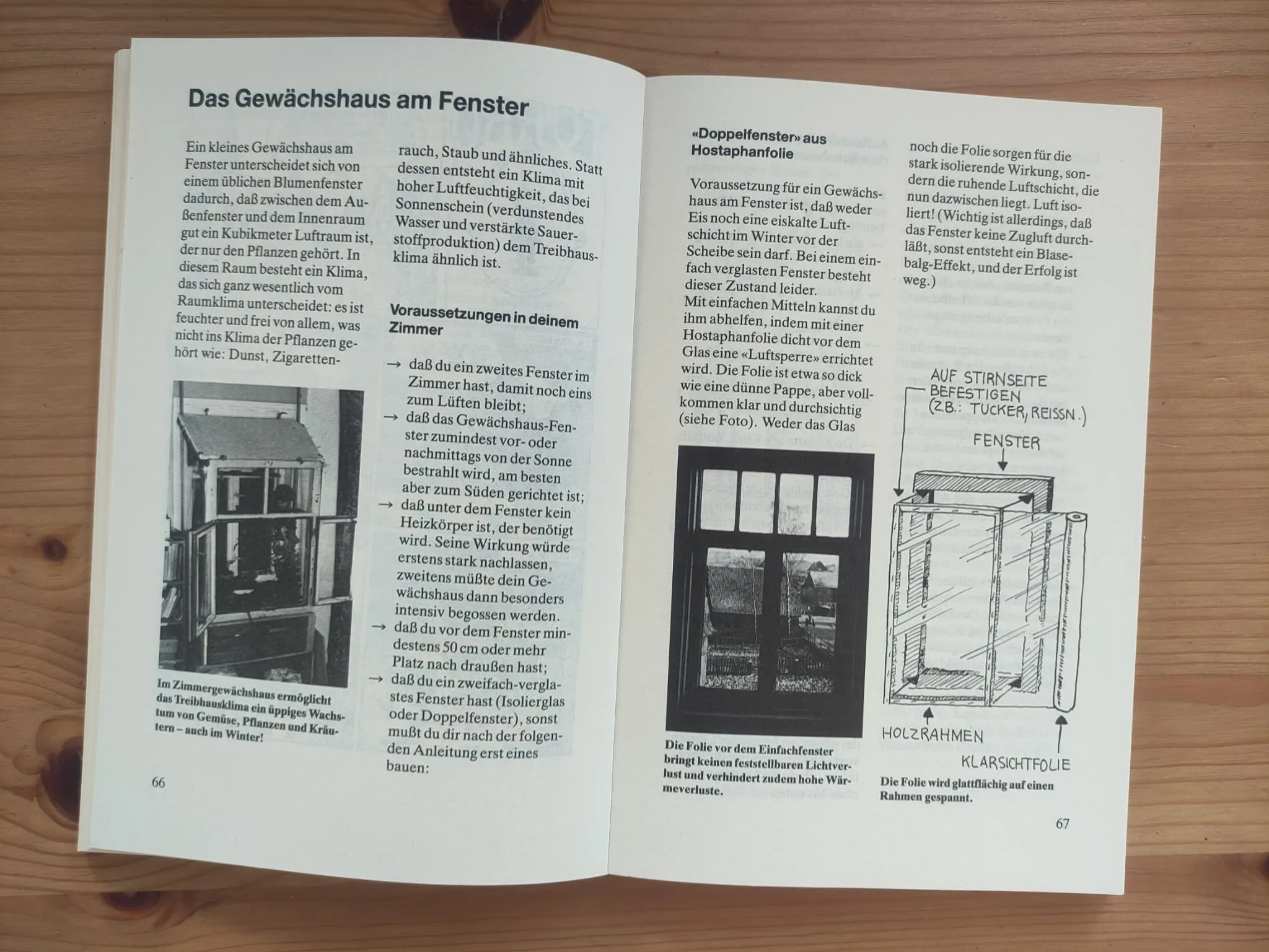
Figure 3. ‘The greenhouse by the window’ from the Umweltwerkbuch, 1986.
I took the book home from that table at the Nebelhöhle. Someone had cared enough to pass it on instead of throwing it away, trusting that a stranger might do something with it. Maybe that is where it starts: with small, unrewarded acts of passing things on. Writing this post is my way of putting the book back on the table. If you have a backyard, a balcony or a flat roof, the knowledge you need was already printed in 1986. The question is whether we are ready to make time for it. Grassroot initiatives are helpful, but they generally need structural support to really change the system and keep flourishing.
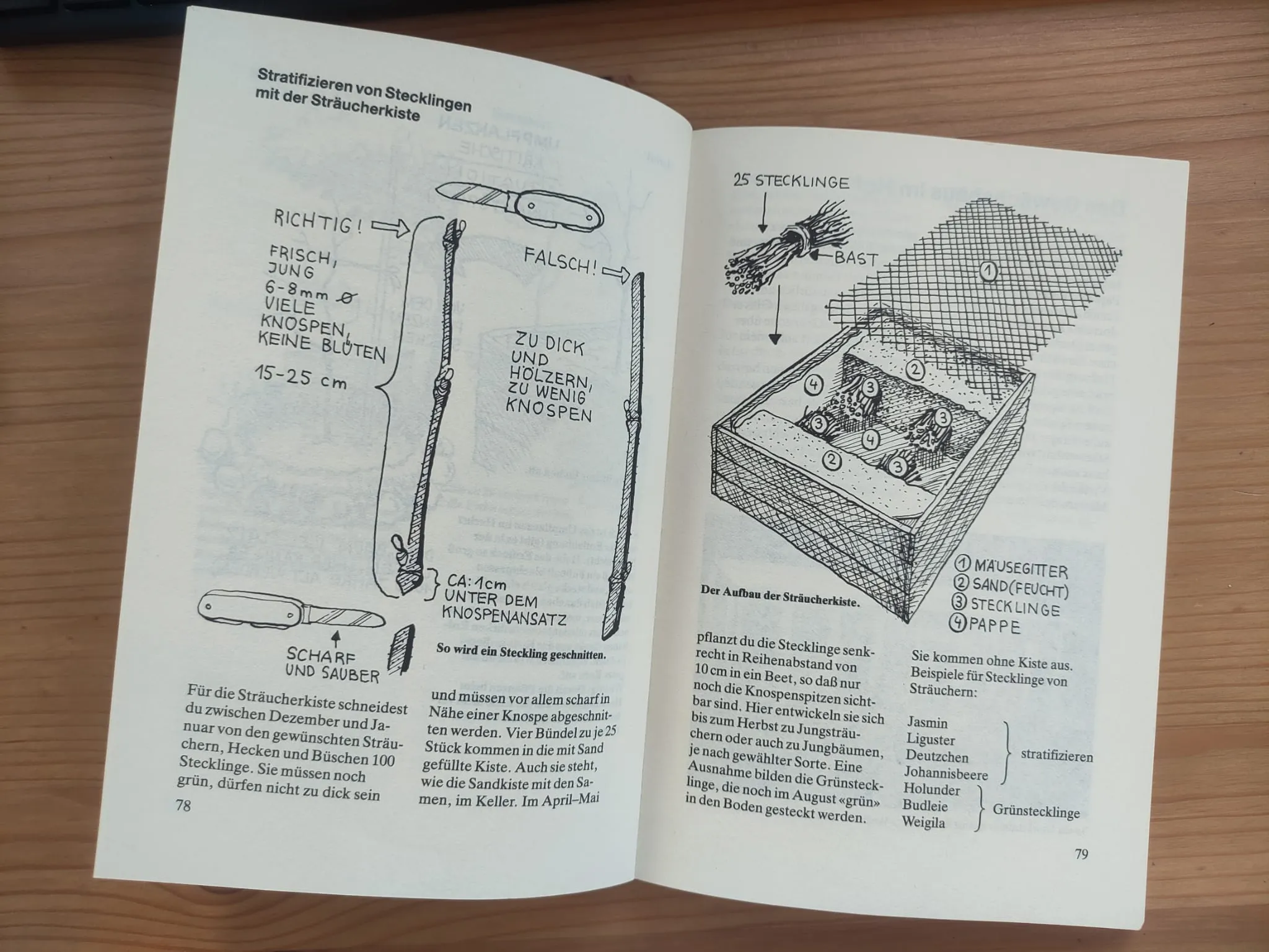
Figure 4. ‘Stratifying cuttings using a box’ from the Umweltwerkbuch, 1986.
Author: Dr Katharina Hecht I am an environmental scientist and ecologist working at the interface of ecology, urban design, and sustainability science. My research focuses on ecosystem services, regenerative design, and how ecological knowledge can inform sustainable buildings and cities.