Definitions
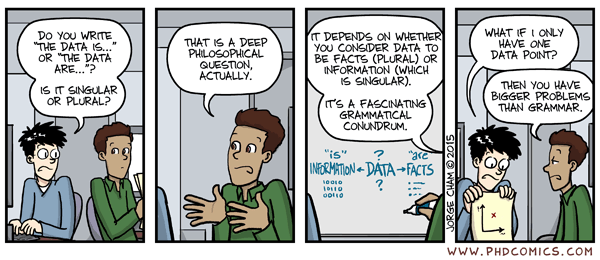
Before diving into data management, it would be good to get familiarized with some data-related terms that are oftentimes misunderstood or used interchangeably.
Research Data Management
Research Data Management (RDM) refers to the active organization and maintenance of data created during a research project. It is an ongoing activity throughout the data lifecycle, from initial planning to suitable archiving of the data at the project’s completion.
FAIR Data
The FAIR Data Principles are a set of guiding principles to improve scientific data management and stewardship (Wilkinson et al., 2016)
- Findability makes it possible for others to discover your data (metadata, Persistent Identifiers, etc.).
- Accessibility makes it possible for humans and machines to gain access to your data, under specific conditions or restrictions where appropriate.
- Interoperability ensures data and metadata conform to recognized formats and standards which allows them to be combined and exchanged.
- Reusability requires lots of documentation, which is needed to support data and interpretation and reuse.
Open Data
Open Data is data that can be freely used, re-used, and redistributed by anyone - subject only, at most, to the requirement to attribute and share-alike (Open Data Handbook).
Note that your data does not have to be ‘open’ to be FAIR!
Make your data… ‘as open as possible, as closed as necessary’ (European Commission).
Summary
In short,
- RDM = an activity/practice
- FAIR = principles that guide RDM activities/practices
- Open Data = data does not have to be ‘open’ to be FAIR!