Preferred Formats
What
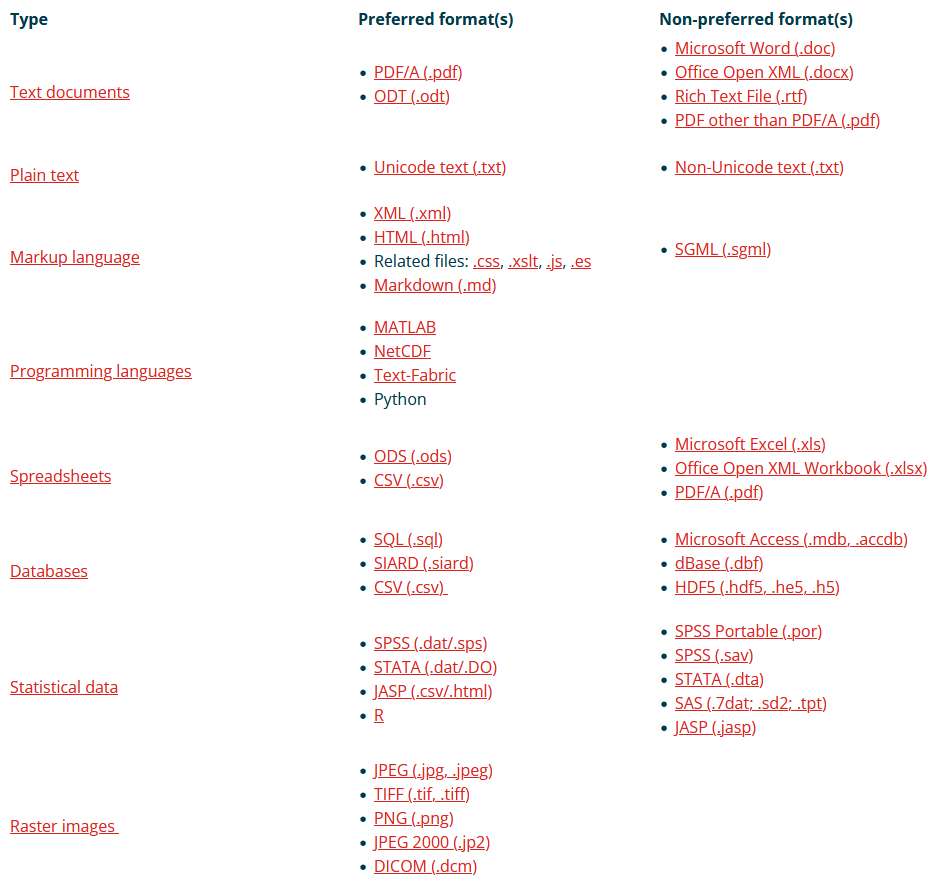
File formats that offer the best long-term guarantees for usability and accessibility are considered preferred or sustainable formats.
Why
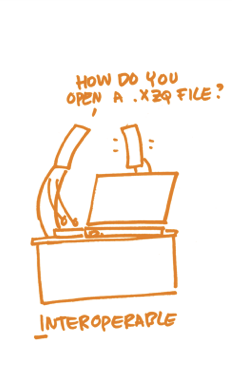
If you’ve ever struggled to open older Microsoft Excel or SPSS files, you understand why using preferred or sustainable formats is important. The formats you choose affect both your own and others’ ability to access and use your materials. This is especially important for files tied to proprietary software, as you or others may lose access to the software or compatible versions in the future. longer be available.
Who
The lead researcher (PI for larger projects or lead author for a publication) should define the preferred formats. This should be communicated to team members and collaborators to minimize unnecessary file conversions.
When
The preferred formats should be defined early in the project. It is recommended to work with them straightaway. However, you may find it easier to use non-preferred formats during the active stage of your project. In that case, you can create copies of your files in preferred formats at the archiving stage.
Where
You can specify both preferred and non-preferred formats in your Data Management Plan (DMP). Files in preferred formats should be included in your data package at the archiving and publishing stages, assuming they were not being used during the active stage of your project already.
How
Refer to DANS’ guidance on preferred formats. Creating files in preferred formats is usually as simple as selecting the appropriate option when saving, instead of using the default option.