Data Governance
What
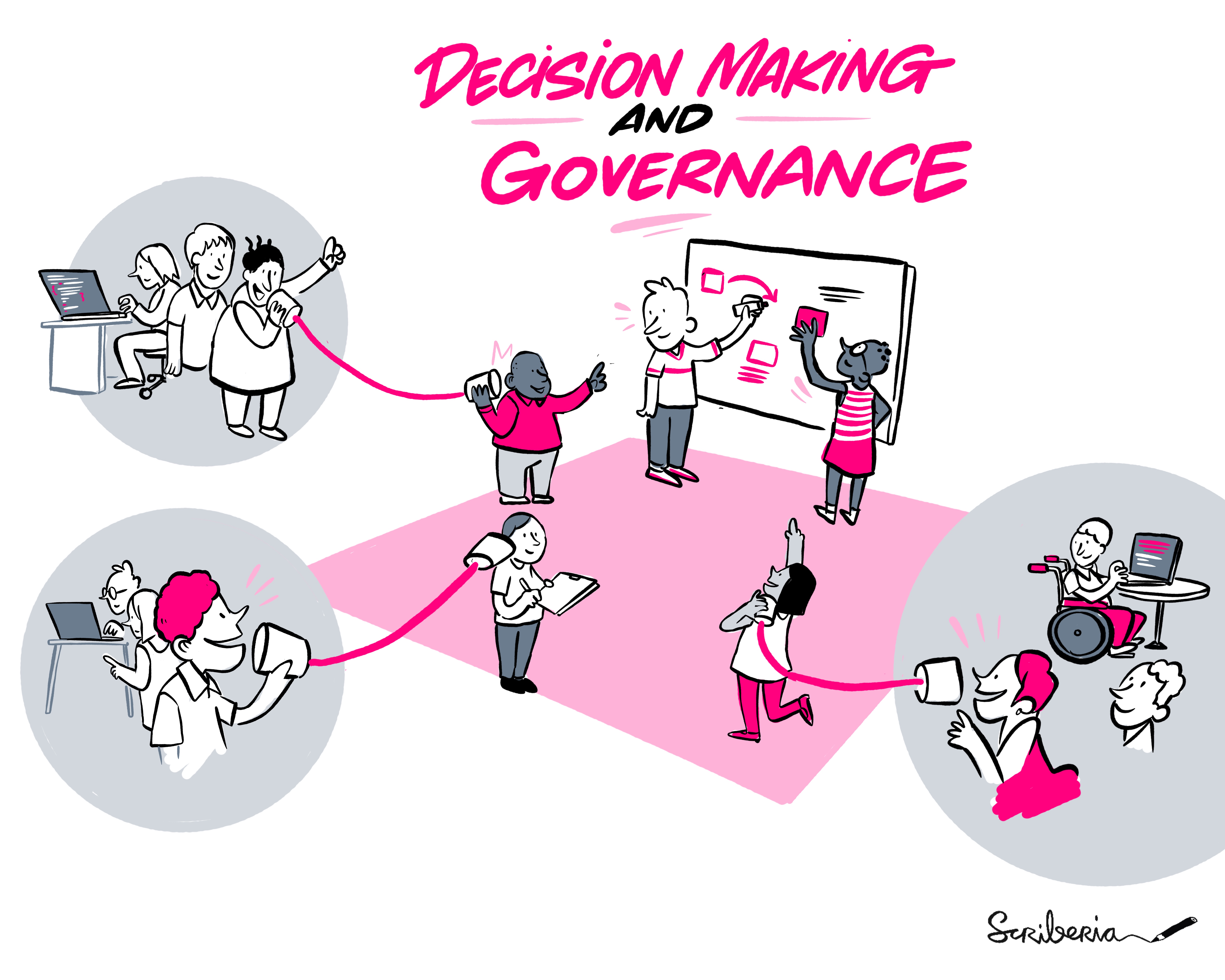
Data Governance defines how data are managed beyond the scope of the original project by setting out roles and responsibilities, as well as processes and policies. It ensures data are handled consistently and responsibly in support of ethical use, compliance, and long-term value.
Why
Without clear guidance, data sharing and reuse can become time-consuming and easily deprioritized. A data governance framework reduces ad hoc communication and provides a standard operating procedure for making decisions and responding to requests, reducing friction and making follow-through more manageable.
Who
All members of the research team involved in handling data should contribute to or be consulted when defining the framework. The principal investigator (PI) plays a central role in establishing and upholding data governance.
When
It is most effective to develop the framework in detail as data sharing and reuse approach. However, discussing goals and aspirations earlier in the project helps ensure that research data management decisions support these long-term objectives.
Where
Documents related to data governance can be made publicly available alongside the data package in the chosen repository, providing transparency and guidance for future users.
How
When you’re ready to start sharing your data, you can set up a detailed Data Access Protocol (DAP) that outlines data governance for yourself, your research team, and potential re-users.
A DAP can cover many topics, and it will require you and/or your project team to decide what is relevant and appropriate for your data. You can make it as simple or as elaborate as you like.
It would help to reflect on the following points:
Goals: What would you like to achieve by sharing your data? Some examples include citations/acknowledgments, co-authorship, or collaboration. Specify this in the DAP so end-users understand their obligations.
Resources: How much time and effort can you and/or your team invest in data governance? Consider tasks such as assessing incoming requests, preparing datasets for sharing, and maintaining a data sharing logbook. Note: If privacy-sensitive data are involved, even the simplest DAPs must consider legal requirements.
Some suggestions for sections in your DAP include:
- Data Ownership / License & Copyright
- Roles & Responsibilities
- Terms & Conditions
- Data Request & Review Procedure
- Publication & Authorship Guidelines
- Disclaimers & Liabilities
You may also want to provide documents such as a Data Request Form and Publication Checklist for end users. These can be included in the DAP appendices and made available separately for easy access.
Examples
UU/UMCU Projects:
- PROactive Cohort Study’s Data Access Protocol
- YOUth Cohort Study’s Data Access & Publication Guidelines
Non-UU/UMCU Projects:
- L-CID’s Data Sharing Protocol, scroll down to Request Access To Our Data
- NTR’s Data Sharing Procedures
- TRAILS’ Data Request & Publication Plan