Metadata
What
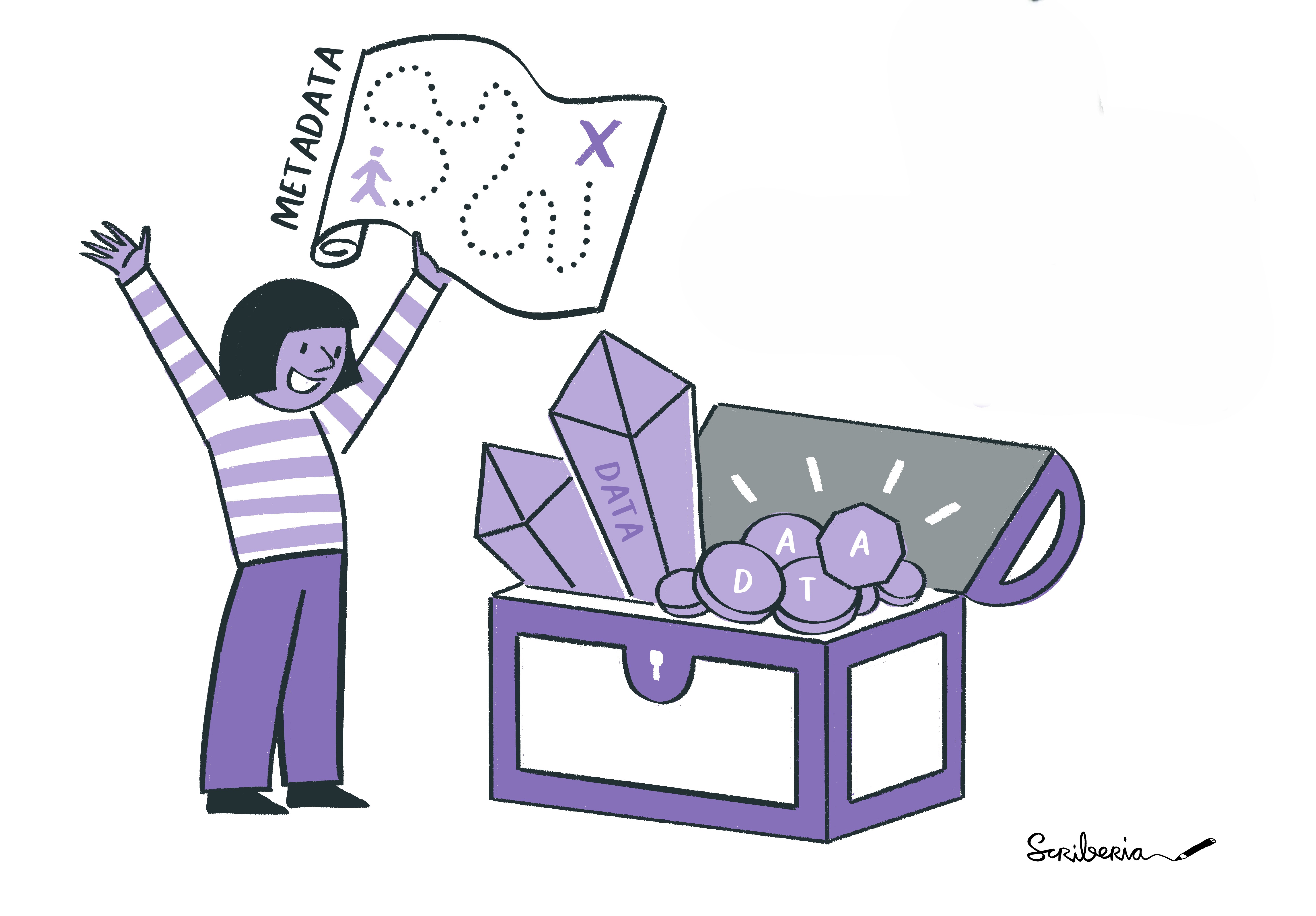
Metadata refers to structured and machine-readable information that describes one or more aspects of your research data. In other words, metadata = “data about data.”
Why
Metadata that is structured and machine-readable makes your data findable and citable, improving accessibility and reusability.
Who
Researchers working with the data, as well as those involved in archiving and publishing, are responsible for ensuring metadata of sufficient quality.
When
Ideally, you will generate some metadata over the course of your project. At a minimum, metadata should be created before archiving and publication.
Where
Metadata should be made available alongside your data. This would be within your project folder during the active stage of your project and in your data package at the archiving and publication stages.
How
Metadata exists at different levels:
Project-Level Metadata
This describes higher-order aspects of your dataset: the “who, what, where, when, how, and why.” It provides context for understanding why the data were collected and how they were used. Examples include:
- Name of the project
- Dataset title
- Project description
- Dataset abstract
- Principal investigator and collaborators
- Contact information
- Dataset handle (DOI or URL)
- Dataset citation
- Data publication date
- Geographic description
- Time period of data collection
- Subjects / keywords
- Project sponsor
- Dataset usage rights
Project-level metadata is typically entered into a metadata form on your chosen data repository.
Data-Level Metadata
This is more granular and describes the data (variables) and dataset in detail. Examples include:
- Data origin: experimental, observational, raw or derived, physical collections, models, images, etc.
- Data type: integer, Boolean, character, floating point, etc.
- Instruments used
- Data acquisition details: sensor deployment, experimental design, sensor calibration methods, etc.
- File type: CSV, MAT, XLSX, TIFF, HDF, NetCDF, etc.
- Data processing methods and software used
- Data processing scripts or code
- Dataset parameter list, including:
- Variable names
- Description of each variable
- Units
- Variable names
Some data-level metadata can be included in repository metadata forms, but is typically captured in codebooks/data dictionaries and or project documentation.